
- Role
- Product lead: research, specs, console UI and pitch
- Company
- Agentic AI Build Week 2026
- Period
- Hackathon · Agentic AI Build Week 2026
- Stack
- Go, React, PostgreSQL, Elasticsearch + yente
The problem
The insight
The bottleneck isn't detecting risk. It's changing the rules.
GoTyme had just handed its banking customers a crypto wallet (6.5M users, the bank's own public figure). Every , withdrawal and cross-exchange transfer can raise an alert, so alerts grow with volume. A digital bank can't answer ten times the volume with ten times the analysts, and for a licensed crypto exchange one AML miss is a licence event, not a fine.
The tension sat in 2,000 alerts analysts had already resolved. Some alert types were cleared every single time: pure noise. One, high crypto-wallet risk, split roughly 50/50: a coin flip only a person should call. So the real question was never "can AI score this?" It was "which alerts are we allowed to automate, and can we defend that to a regulator on any date?"
- Agentic AI Build Week 2026
- 2nd place
- resolved alerts in the team's corpus (seed data)
- 2,000
- GoTyme users in the brief (company's public figure)
- 6.5M
Source: Cortex Sentinel pitch deck, p.2, p.3 and p.16. The user figure is GoTyme's own.
Ownership
What I owned
This was a team build on top of the open-source Marble decision engine. I led the product side: I researched Vietnamese AML law and the , wrote a 14-file user-story set, and specced every workflow as a clickable mockup before any UI existed. Then I re-skinned the console to match those mockups and wrote the pitch. Teammates built most of the backend and AI plumbing.
Two decisions were mine. First, spec before build: each screen existed as a mockup with real Vietnamese AML cases (fictional people) so the team argued about the workflow, not the pixels. Second, label every claim: in the pitch each number is tagged live, prototyped or , and the deck says out loud which parts were the platform's. Filter the map below to see exactly what that meant.
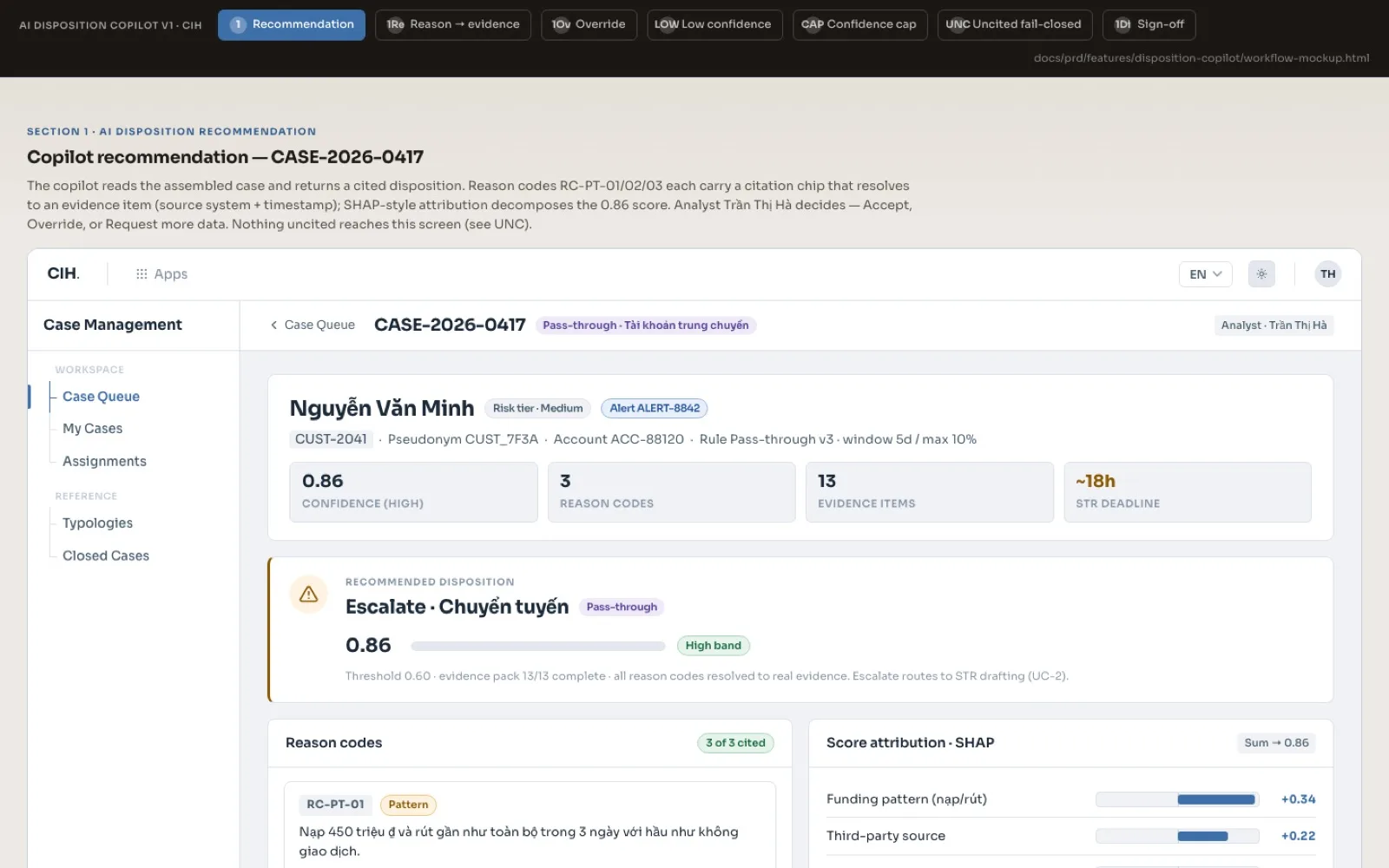
Disposition copilot: every reason cites its evidence
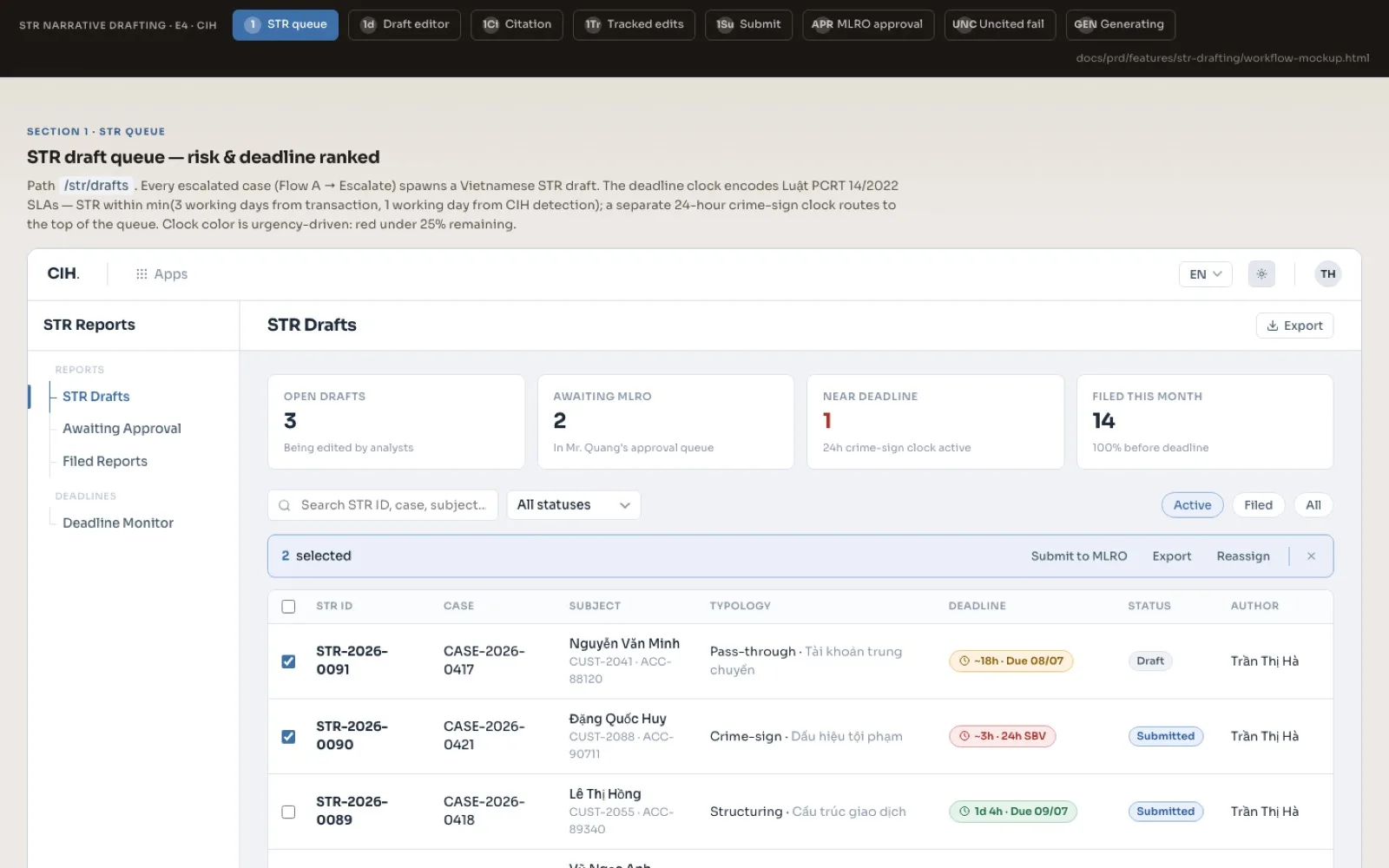
STR drafting: drafts ranked by legal deadline
Rule authoring
How a rule is born
Today a new laundering pattern means an engineer, a ticket and a blind deploy. In the console an analyst describes the rule in plain English, an agent turns it into a typed rule and checks it against the data model, and a person saves it. Step through it yourself.
Before it ships, the new version runs beside the live one
Demo dataHover a segment, or tap a name below, to read it.
Scoring
How a rule decides
Fire the rules, watch the score move
Demo rulesScore 45 lands inReview
The triage gate
What the machine may close
This is the team's own layer. A model recommends, but a fixed, auditable gate decides, and it fails closed: if anything is uncertain, a person gets the alert. Try to get the coin-flip alert auto-cleared.
Three-lane triage on the backtest corpus
Backtest, sample data- All alerts100%
- Auto-closed by the triage gate6.5%
- True positives among the auto-closed0%
No real case escaped through auto-close.
Manual review load, baseline rules vs the gate
Backtest, sample dataThe decision
Who is allowed to close an alert?
A model recommends, but a fixed, auditable gate decides, and it fails closed: if anything is uncertain, a person gets the alert.
Cost I accepted: Only a small share of alerts is closed automatically: 6.5% in the backtest, on sample data.
Source: Cortex Sentinel pitch deck, p.15 (fails safe, guard chain) and p.19; project story (backtest on sample data).
What shipped
The console
- 01
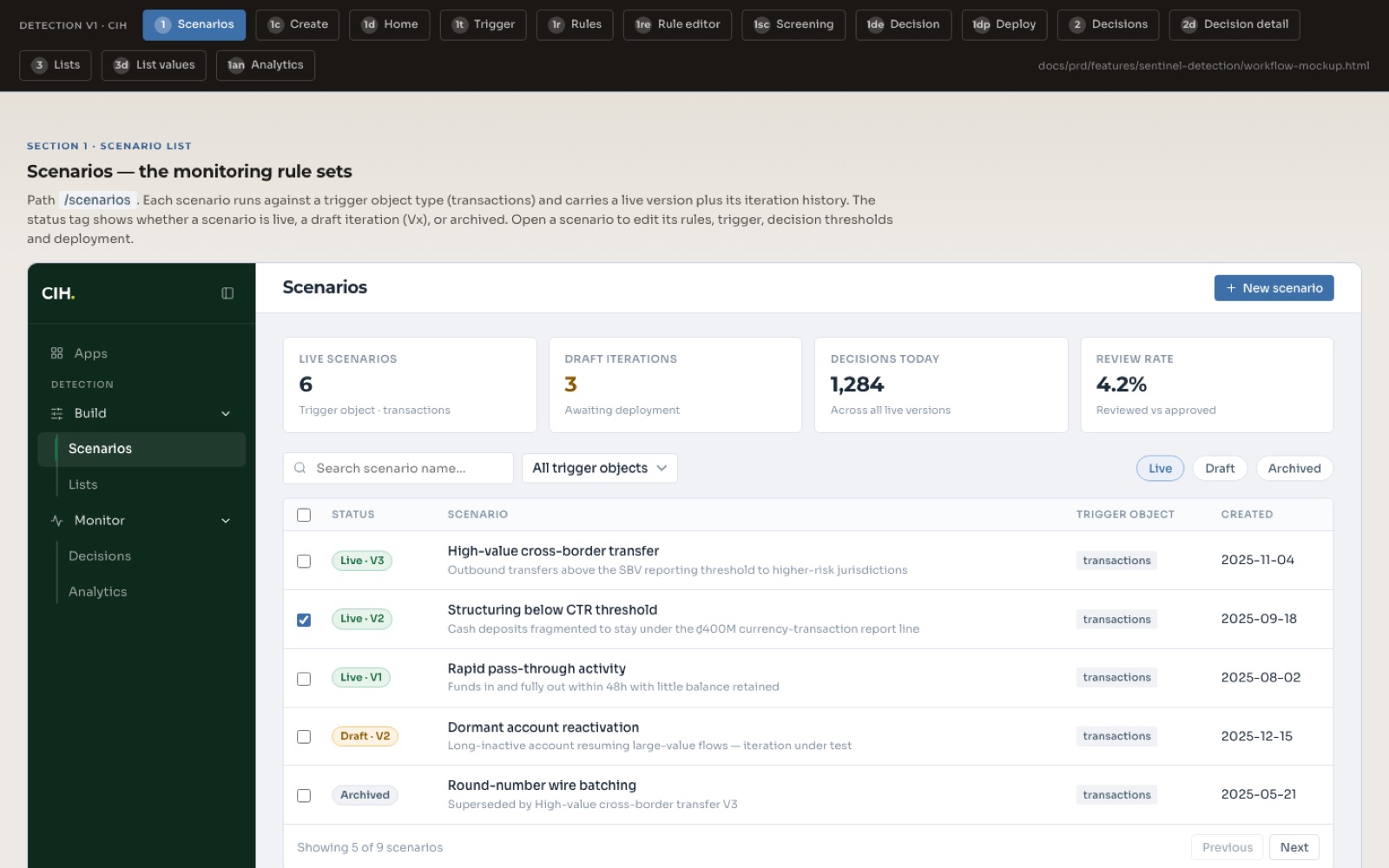
Detect
Scenarios and rules run on every transaction, with versions you can replay for a regulator on any date.
- 02
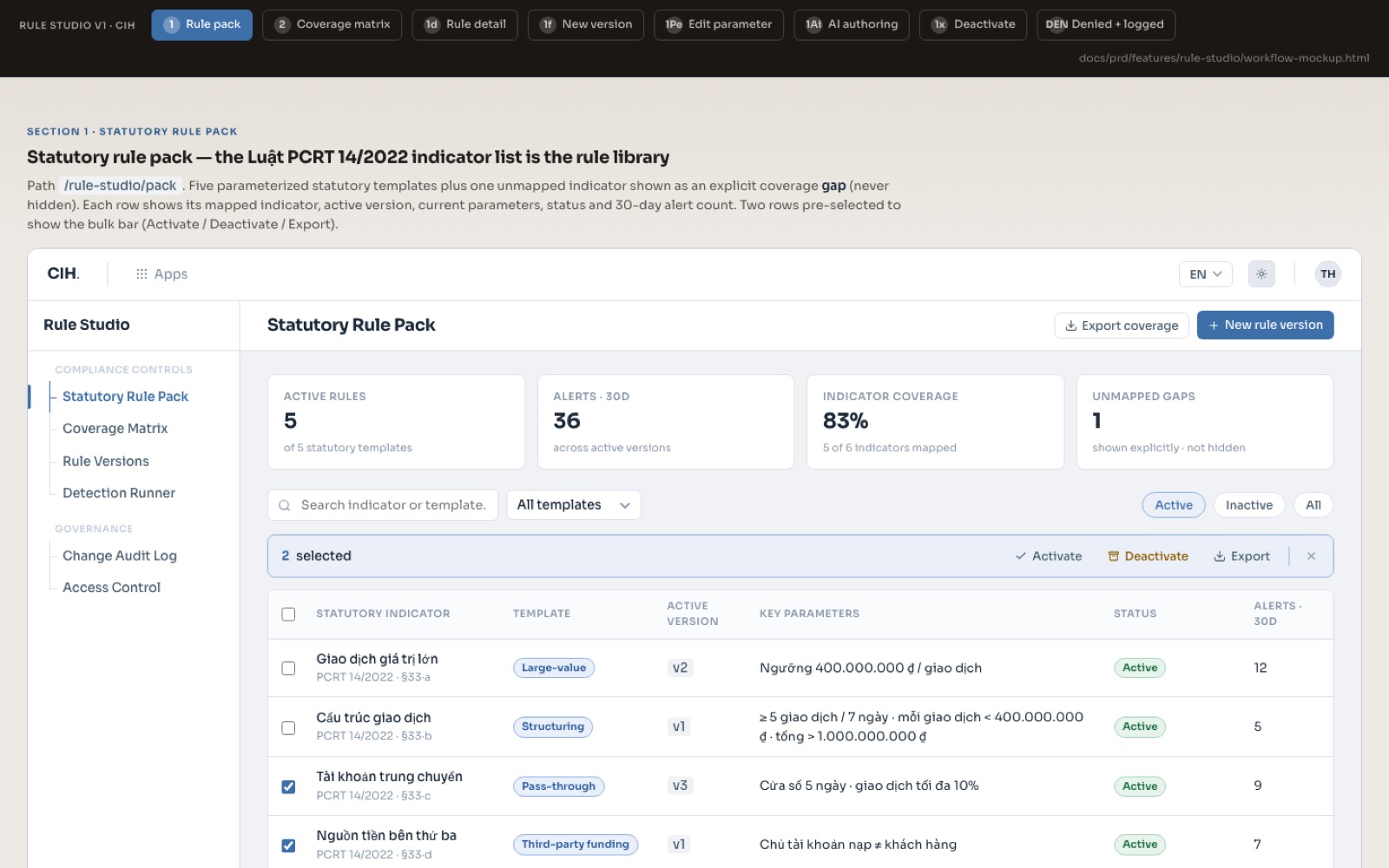
Write a rule in plain English
The rule studio where the agent's draft lands for a person to review.
- 03
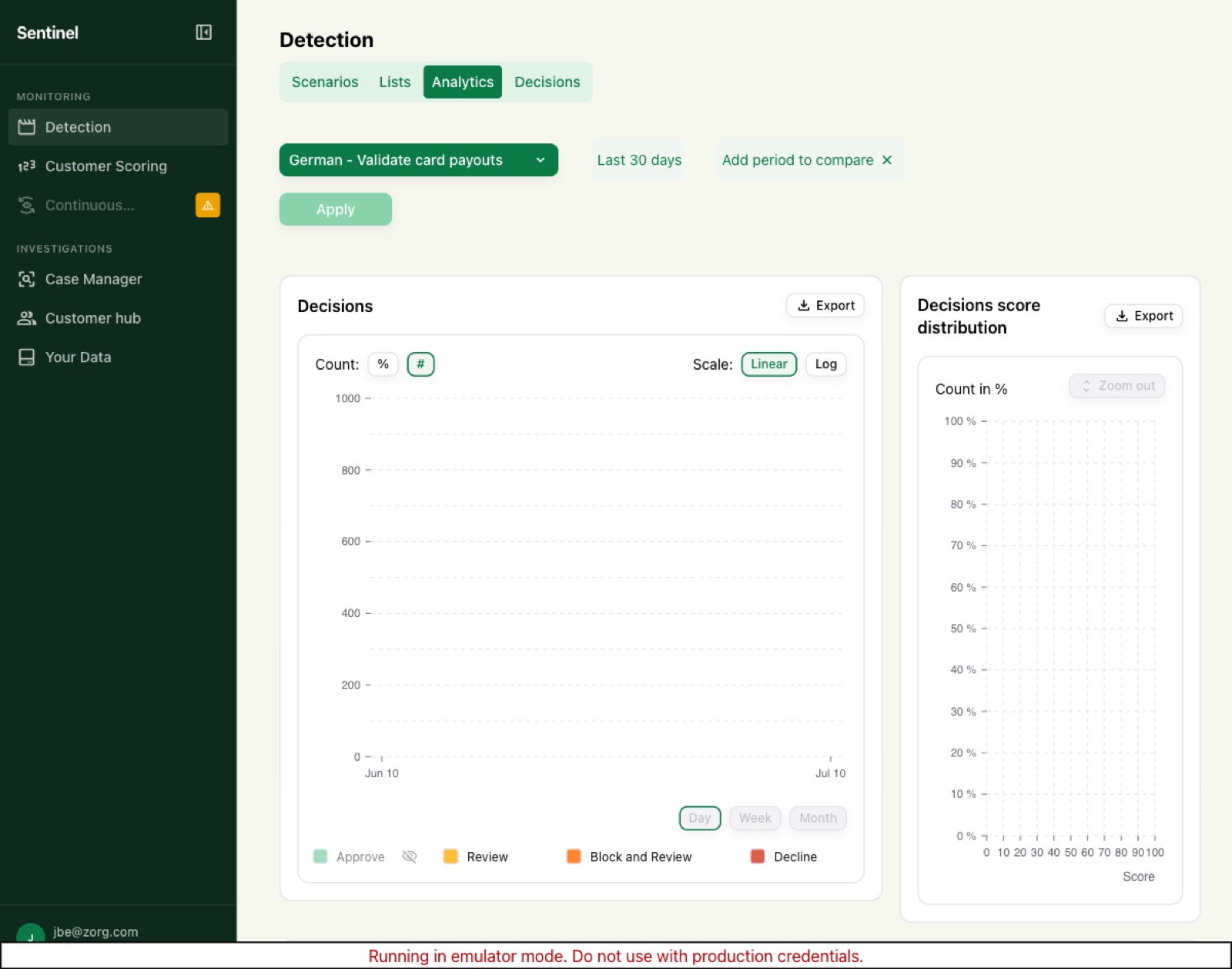
Watch the decisions
Every decision is logged with its outcome and score.
- 04
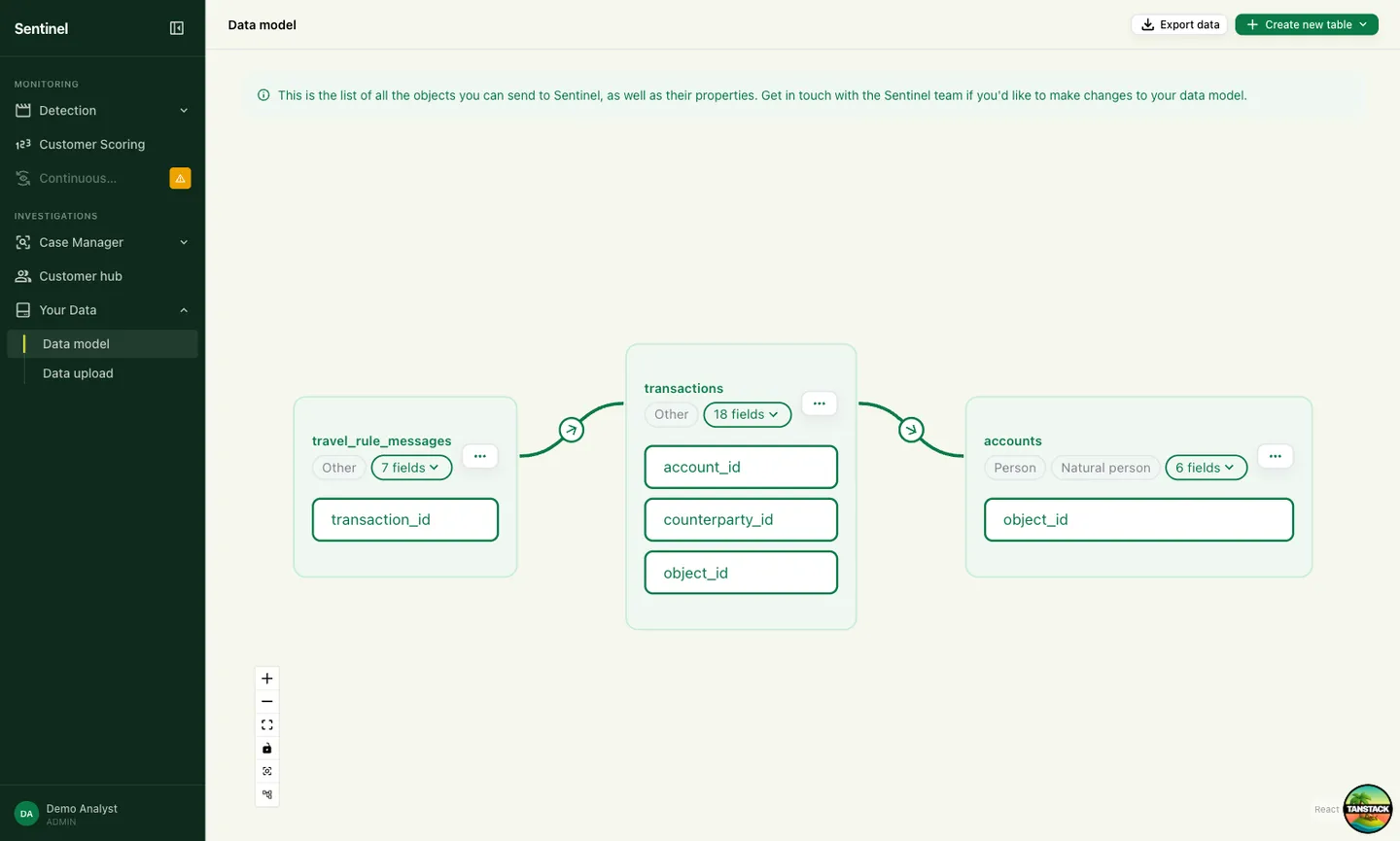
Model your own data
Transactions, accounts and Travel Rule messages are mapped once, so every rule and review reads the same source.
Agentic AI Build Week 2026
Demo day
Results
- place, Agentic AI Build Week 2026Public result
- 2nd
- of alerts auto-closed by the triage gateBacktest, sample data
- 6.5%
- true positives among the auto-closed alertsBacktest, sample data
- 0
What I would do next: wire the scorer into the live decision path and add a publish gate.
Source: Cortex Sentinel pitch deck, p.16; project story (team backtest on sample/seed data, not production results). Placement from the event result.